
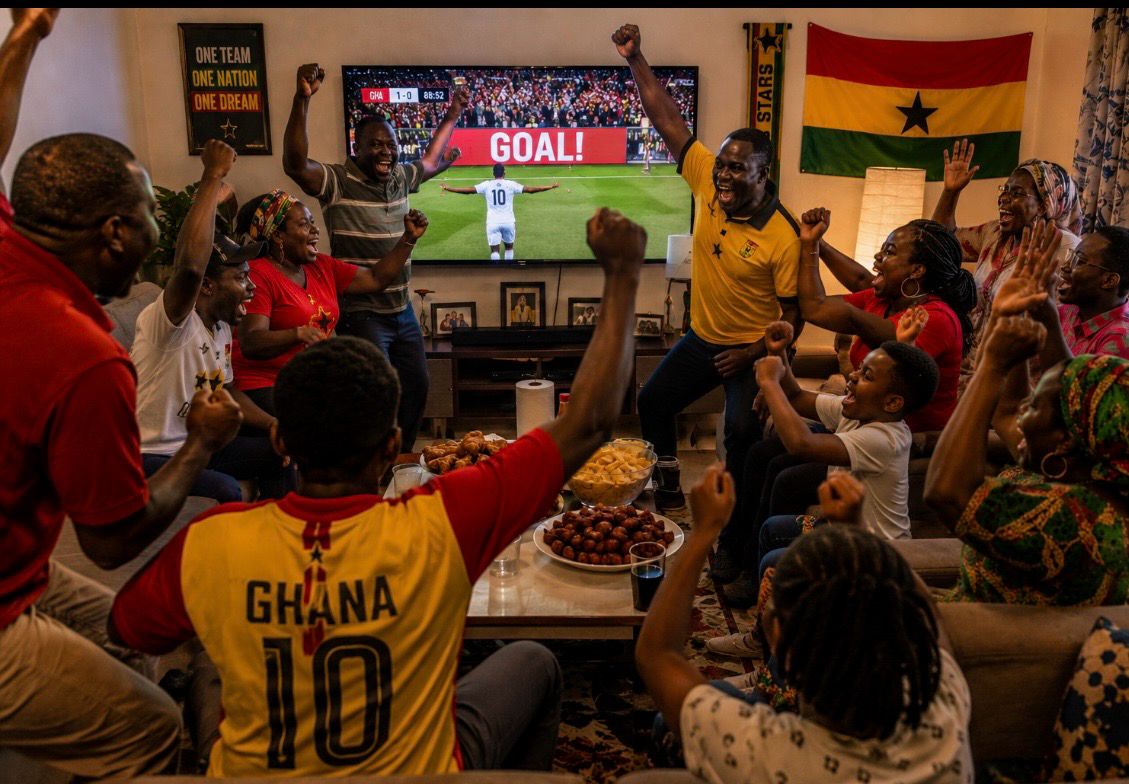
As Ghana prepares to face Panama at the 2026 World Cup, homes across the country are transforming into arenas of hope, tension, celebration, and shared national pride.
The chairs have been rearranged. Extra seats appear from bedrooms and balconies. Everyone tries to finish up their work on time. Mothers, aunties, and sisters get busy preparing favorite savory dishes. Bowls of kelewele, chips, and chicken are placed within easy reach. Someone is calling to check up on others who are yet to report, while others predict the scores. As friends, neighbors, cousins, and the occasional unexpected guest filter through the door, an ordinary living room begins its transformation.
When Ghana plays on the world stage, football rarely remains confined to the pitch. Across the country, homes become gathering grounds where generations sit side by side, emotions rise and fall in unison, and every pass, tackle, and goal is felt collectively. For ninety minutes, the living room ceases to be just another room in the house. It becomes a stadium alive with chants, celebrations, nervous silences, and the unwavering hope that accompanies every Black Stars match.
As Ghana prepares to face Panama at the World Cup, countless households will once again take on this familiar role. Beyond the television screen lies a story of community, tradition, and belonging, one that reveals how football continues to bring people together, one living room at a time.
One Room, One Crowd
Once everyone has settled into their seats, the living room begins to take on a life of its own. The conversations that filled the room moments earlier gradually narrow to a single focus: the screen.
In that moment, individual identities begin to blur. The uncle who never misses an opportunity to critique the coach, the neighbor who arrived uninvited but is always welcome, the auntie who insists she is only there for the company but makes the loudest noise when there is a goal, and the child experiencing the thrill of a major Ghana match for the first time all become part of the same crowd.
Unlike a stadium, there are no assigned sections in a living room. Different generations sit side by side. Friends and strangers exchange opinions as though they have known each other for years. Every person brings their own personality to the room, yet they are united by a shared investment in what unfolds on the screen.
For the next ninety minutes, victories and disappointments will not belong to individuals. A missed chance will draw a collective groan. A dangerous attack will have everyone leaning forward at the same time. And should Ghana find the back of the net, the eruption of joy will belong to the room as much as it belongs to the team.
What makes these gatherings special is not simply that people are watching the same match. It is that they are experiencing it together. In a country where football has long served as a common language, the living room becomes a space where differences fade into the background and a temporary community takes shape: one crowd, one voice, and one shared hope.
Eventually, the match ends.
The room that moments ago echoed with cheers, groans, and passionate commentary begins to quiet down. People gather their belongings, finish the last of the snacks, and slowly make their way home. By morning, there will be little evidence that anything extraordinary happened there.
Yet for ninety minutes, an ordinary living room became something more. It became a place where neighbors, friends, and family shared the same hopes, frustrations, and celebrations. A place where football blurred differences and gave everyone a reason to gather.
The goals will be remembered. The result will be discussed. But long after the final whistle, it is the feeling of being together that lingers. And perhaps that is the true magic of match day: not what happens on the pitch, but what happens in the rooms where we watch it unfold.
Written by Yasmine Agyeiwaa