
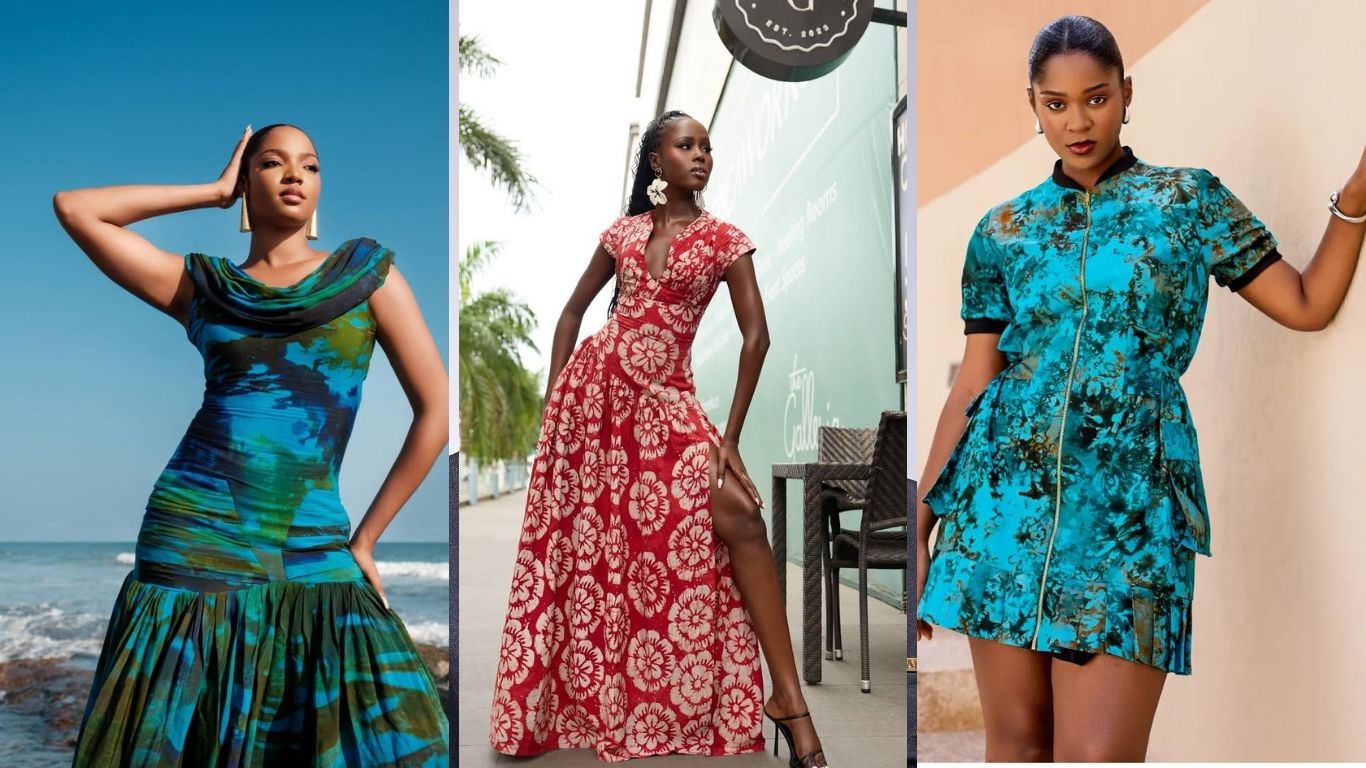
For decades, tie & dye fabric has held a quiet but powerful presence in Ghana’s textile culture often associated with craft markets, school art projects, and everyday casual wear. Today, however, a new wave of African designers is boldly reintroducing tie & dye to the fashion conversation, transforming the once-humble textile into runway-worthy statements, luxury ready-to-wear, and youth-driven street style.
What was once considered “local” is now undeniably global.
A Craft Rooted in Heritage
Tie & dye, known across West Africa by different names such as adire in Nigeria, is rooted in resist-dyeing techniques that involve folding, binding, stitching, or clamping fabric before immersing it in dye. The result is an organic interplay of patterns – no two pieces ever truly identical. In Ghana, these techniques have traditionally been practiced by artisans and small-scale producers, often using indigo and hand-mixed pigments to create geometric and symbolic patterns.
For years, however, the fabric sat on the sidelines of mainstream fashion, overshadowed by wax print, imported prints and fast-fashion trends.
That narrative is changing.
The New Generation of Tie & Dye Designers
Across Accra and beyond, Ghanaian designers are now repositioning tie & dye as a premium, expressive textile. From luxury gowns and power suits to edgy co-ord sets and avant-garde silhouettes, tie & dye has become a canvas for innovation. Instead of the predictable spiral patterns of the past, today’s designers are experimenting with abstract watercolour effects; Layered ombré dyes; Controlled marble textures, Architectural folds and clamps and Multi-colour gradient techniques
The results feel fresh, modern, and unmistakably African – crafted for the global consumer while staying rooted in local identity.
Trendy Silhouettes Meet Handmade Textiles
One of the most compelling shifts is how tie & dye is now being applied to trendy, youth-driven silhouettes. Designers are pairing the fabric with bustier tops and sculpted corsetry, tailored blazers and wide-leg trousers, flowy maxi dresses with dramatic slits, oversized shirts, hoodies, and relaxed streetwear fits.
The contrast between structured tailoring and the fluid unpredictability of tie & dye creates powerful visual tension with each piece feeling both controlled and free.
For Ghana’s fashion-forward youth, tie & dye is no longer “old school.” It is bold, expressive, and Instagram-ready.
Sustainability at the Heart of the Revival
Beyond aesthetics, the resurgence of tie & dye also aligns strongly with Ghana’s growing sustainability movement. Many designers are working with locally sourced cotton, using low-impact or natural dyes, Producing in small, intentional batches, collaborating directly with local dyers and textile artisans
In an industry challenged by waste and overproduction, tie & dye offers an earth-conscious alternative to slow fashion with soul.
From Beachwear to Bridal: The Fabric’s New Versatility
What makes today’s tie & dye movement particularly exciting is its versatility. Designers are no longer limiting the fabric to casual daytime wear. It is now showing up in Resort and swimwear collections, Contemporary bridal pieces such as bridal party looks, red carpet moments, corporate-friendly coordinated sets, and festival and performance fashion
This shift challenges the long-held belief that tie & dye is too informal for luxury spaces. Ghanaian designers are proving that craftsmanship, when elevated through design, can exist anywhere—from the runway to the aisle.
Cultural Identity in Motion
At its core, the tie & dye revival is about more than trends, it reflects a deeper cultural reawakening. In an age where African designers are increasingly conscious of global validation, many are now turning back inward for inspiration. Tie & dye allows them to tell stories of heritage, labour, patience, and imperfection—while still speaking fluently to contemporary fashion audiences.
Each piece becomes a visual narrative: unpredictable, expressive, and deeply human.
The Global Eye Is Watching
With international buyers now paying closer attention to African craftsmanship, Ghana’s reimagined tie & dye stands at the intersection of tradition and export-ready design. The fabric’s individuality once seen as a limitation has now become its greatest strength in a world saturated with mass production.
As Ghanaian designers continue to reinterpret tie & dye through luxury, youth culture, and sustainability, one thing is clear: the fabric is no longer confined to the past. It is very much shaping the future.
This article features Photos from Designers such as Elle Melange, Talensi Atelier, Ghana Fashion Marketing, MintSauz, ICA Drew, Tye.Fusion