
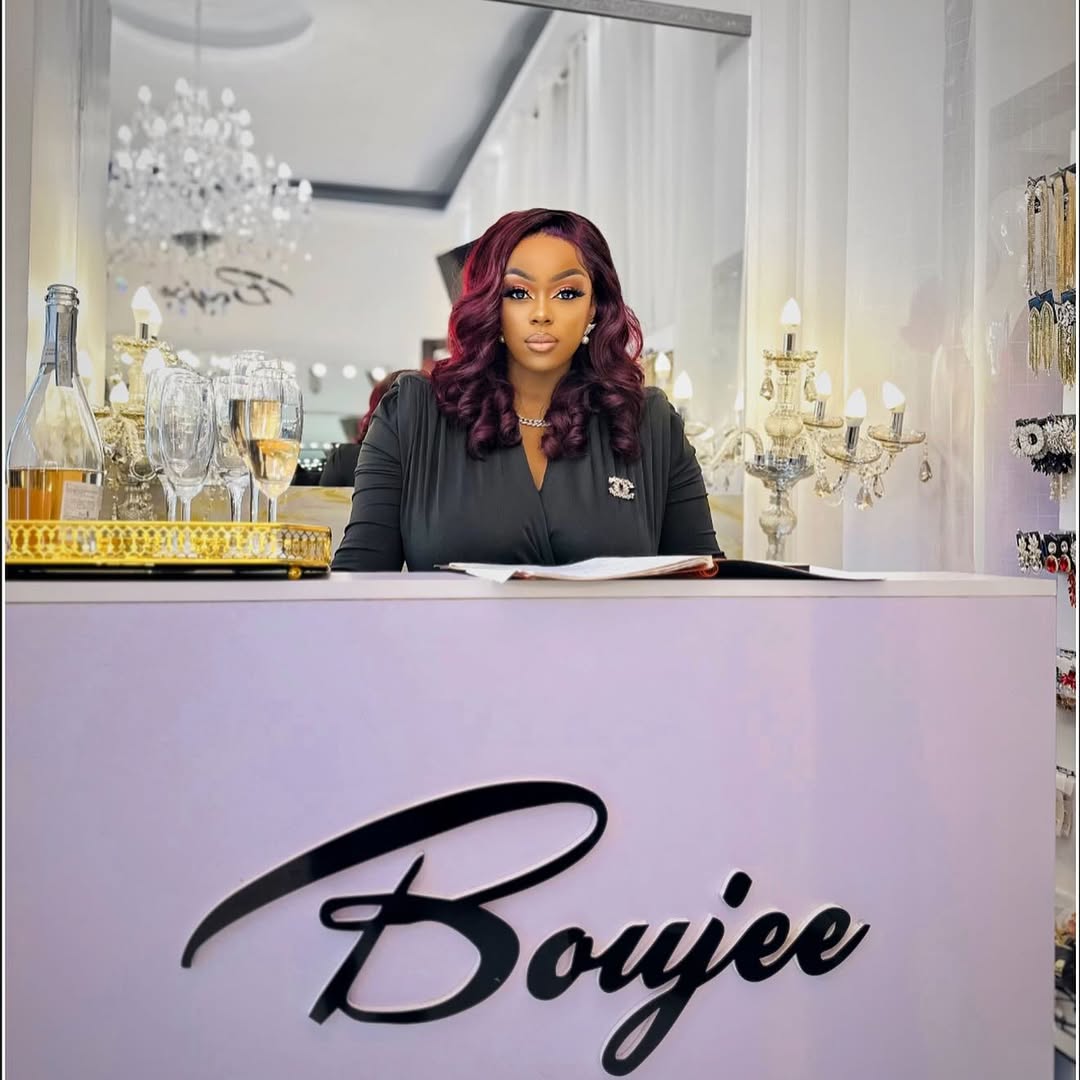
As global attention increasingly focuses on established African fashion capitals like Lagos, Johannesburg, and Nairobi, the continent’s internal luxury consumption dynamics are undergoing rapid evolution, particularly in East Africa. The catalyst behind Kampala, to be exact, slowly becoming one of the region’s top fashion hubs is the growing appetite for high-quality local and international luxury fashion across East Africa. This demand has been met by pioneering brands such as Fazal Kenya, Leorana, and Ichyulu in Kenya, and Industrie Africa in Tanzania. Kampala has now been responding in kind, starting with ventures like Bold in Africa, and Boujee UG.
Boujee UG, a luxury fashion store located in Kisementi in the heart of Kampala, is not merely a trading post; it operates as a specialized fashion boutique that exclusively sources and sells brand-new, first-line collections directly from high-end fashion houses in key global centers like Paris and London, supplemented by established designers across the African continent. Under the direction of its founder, Mami Deb, Boujee UG has successfully positioned itself as a cultural landmark and a verified source for authentic, high-end fashion across East Africa.
Prior to the boutique’s founding in 2017, the regional luxury market was characterized by fragmentation, often compelling affluent East African consumers to rely on international travel or informal, frequently unreliable sourcing channels. Mami Deb identified a critical demand gap: the necessity for a localized destination offering authenticated, contemporary, and highly sought-after pieces from international runways and continental designers, all backed by unimpeachable standards of trust and exclusivity.
Mami Deb articulated a clear operational vision: to establish an ecosystem where clients could transition from transactional purchases to long-term investment in quality garments, shifting away from transient trends. “Our clientele possesses a high degree of global awareness,” she Deb says. “They are seeking an investment piece, not merely a designer label. They demand longevity, exceptional craftsmanship, and immediate access to these standards here in Kampala.”
The success of Boujee UG is anchored in Mami Deb’s exacting curatorial philosophy. The inventory demonstrates a calculated balance, featuring structured, classic silhouettes from European powerhouses such as Saint Laurent, Balmain, and Jacquemus, displayed alongside celebrated African luxury brands. This strategic inventory confirms the boutique’s commitment to primary, first-run collections sourced directly from global fashion capitals.
This deliberate blend is pivotal. While international labels satisfy the demand for globally recognized status symbols, the inclusion of African designers actively connects the consumer base to cultural identity and heritage. Financial data tracked by Boujee UG consistently indicates a strong market preference for high-ticket “investment pieces,” often exceeding the $1,000 threshold, which demonstrates a sophisticated consumer base focused on acquiring wardrobe assets with inherent durability and potential resale value.
“The selection process for any garment, be it a Balmain blazer or a custom Fatumah Asha gown, mandates a verifiable narrative of quality. We are transacting on the promise of durability, legacy, and superior design,” she asserts.
In the high-value luxury sector, guaranteed authentication and client trust are non-negotiable. Mami Deb has systematically cultivated a brand reputation built on integrity, allowing Boujee UG to command respect and execute high-value sales, including instances where runway pieces are secured sight-unseen.
This client trust is reinforced by a strategic commitment to exclusivity. Boujee UG eschews broad-scale mass marketing in favour of personalized client relationships and managed scarcity. Limited-edition collections are typically launched via intimate, invite-only private viewings. This structured approach transforms the acquisition of a new garment into a sought-after, highly controlled social experience. The strategic promotion of scarcity serves to elevate the perceived value of each item and affirms the clients’ participation in an exclusive purchasing segment.
Under Mami Deb’s stable direction, Boujee UG has progressed beyond importing luxury goods; it has validated the region’s commercial relevance on the global luxury map. By demonstrating that African consumers prioritize and invest in certified quality, and by presenting African design alongside international masters at price parity, the boutique is actively influencing the regional definition of East African luxury.
Mami Deb’s future vision focuses on deepening this cultural exchange, maintaining the championing of investment in craftsmanship, and solidifying Boujee UG’s status as the definitive, trusted source for authentic luxury, a functioning fashion barometer operating from the heart of Africa.